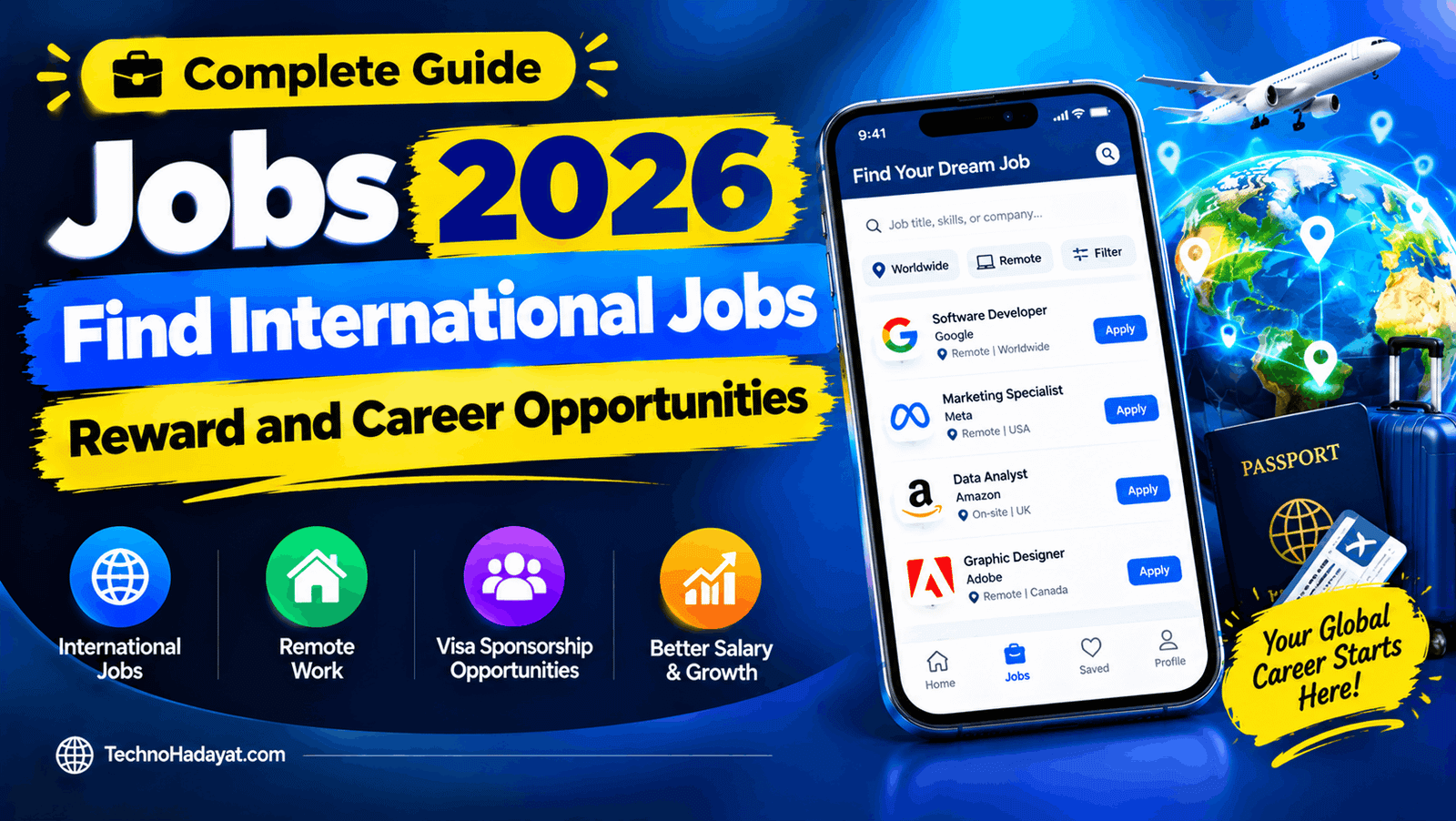
Finding the right job can open the door to a better future, financial stability, professional growth, and new opportunities. Whether you are a fresh graduate, an experienced professional, or someone looking for a career change, exploring the right job opportunities is an important step toward achieving your goals.
In 2026, job seekers can explore opportunities in different countries, industries, and work environments. From full-time office positions to remote jobs and international career opportunities, there are many ways to find employment that matches your qualifications, experience, and interests.
TechnoHadayat.com aims to help job seekers explore career opportunities, discover useful employment resources, and learn how to search for jobs more effectively.
In this guide, you will learn how to find jobs, prepare a professional application, explore international opportunities, and improve your chances of getting noticed by employers.
What Are Jobs and Why Are They Important?
A job is a form of employment in which an individual performs specific duties or provides services in exchange for payment. Jobs allow people to earn an income, develop professional skills, gain experience, and contribute to organizations and society.
The right job can provide more than a salary. It can also offer opportunities to learn new skills, build professional relationships, achieve personal goals, and develop a long-term career.
However, finding suitable employment requires planning. Job seekers should understand their qualifications, identify their strengths, and focus on positions that match their abilities and career objectives.
Types of Jobs Available in 2026
Different people have different employment needs. Some prefer traditional office jobs, while others want flexible schedules or the freedom to work remotely.
Here are some common types of jobs you can explore.
1. Full-Time Jobs
Full-time jobs generally involve a regular weekly working schedule. Employees may receive a salary, paid leave, insurance, retirement benefits, and other benefits depending on the employer and local employment laws.
Common full-time opportunities include:
- Software developers
- Accountants
- Teachers and lecturers
- Nurses and healthcare professionals
- Engineers
- Administrative assistants
- Marketing specialists
- Customer service representatives
Full-time employment can be suitable for people seeking a stable income and long-term professional development.
2. Part-Time Jobs
Part-time jobs usually involve fewer working hours than full-time positions. They may be suitable for students, parents, freelancers, or people who need a more flexible schedule.
Examples include retail assistants, tutors, restaurant workers, customer support representatives, and administrative assistants.
Before accepting a part-time position, check the working hours, payment arrangements, contract terms, and any applicable employment restrictions.
3. Remote Jobs
Remote jobs allow employees to perform their work outside a traditional office. Depending on the employer, workers may work from home or another approved location.
Popular remote job categories include:
- Web development
- Graphic design
- Content writing
- Digital marketing
- Virtual assistance
- Online tutoring
- Software testing
- Customer support
- Data analysis
Remote work can provide flexibility, but not every remote job is available worldwide. Some employers only hire candidates who live in specific countries or time zones.
Always check the job description carefully before applying.
4. Freelance Jobs
Freelancers provide services to clients on a project basis or through ongoing contracts. They may work with several clients instead of having a single traditional employer.
Freelance opportunities can include writing, translation, web design, programming, video editing, social media management, and consulting.
Freelancing offers independence, but income may vary from month to month. Successful freelancers often build a strong portfolio, communicate professionally, meet deadlines, and maintain good relationships with clients.
5. Internship Opportunities
Internships help students, recent graduates, and career changers gain practical experience in a professional environment.
Some internships are paid, while others may be unpaid where permitted by local law. Their duration and requirements vary by organization.
An internship can help you understand an industry, develop useful skills, and build professional connections. Some employers also consider successful interns for future full-time positions.
Always confirm the payment terms, responsibilities, duration, and learning opportunities before accepting an internship.
How to Find Jobs Online
Online job searching makes it possible to discover vacancies from employers in different cities and countries. However, searching without a clear strategy can waste time.
Follow these steps to improve your job search.
Step 1: Identify Your Skills and Qualifications
Start by identifying your education, professional experience, technical skills, and personal strengths.
For example, a candidate with programming experience might search for software developer or web developer positions. Someone with accounting qualifications might look for accountant, bookkeeper, or finance assistant roles.
Choosing relevant job titles helps you find positions that are more closely aligned with your background.
Step 2: Choose Your Preferred Country
Decide where you want to work. You may prefer to find a job in your home country, relocate internationally, or work remotely.
Research the local employment market, salary expectations, language requirements, and work authorization rules.
If you are considering an international job, remember that a job offer does not automatically provide permission to work in another country. You may need an appropriate visa or work permit.
Step 3: Select the Right Job Type
Decide whether you want full-time, part-time, remote, freelance, contract, or internship opportunities.
Your preferred job type should match your lifestyle, financial needs, qualifications, and availability.
Being clear about your preferences makes it easier to narrow your search.
Step 4: Use Reliable Job Search Websites
Several established employment platforms allow candidates to search for vacancies by job title, location, industry, and experience level.
Useful resources include:
- LinkedIn Jobs: Search for professional opportunities and connect with employers.
- Indeed: Explore job listings in many locations and industries.
- Glassdoor: Research employers, workplace reviews, and salary information.
- Jooble: Search for vacancies collected from different employment sources.
- EURES: Explore employment opportunities and mobility information for European countries.
- USAJOBS: Search for eligible federal government positions in the United States.
- UK Find a Job: Explore advertised employment opportunities in the United Kingdom.
- Canada Job Bank: Search for Canadian job vacancies and career information.
- Germany’s Federal Employment Agency: Explore employment services and job listings in Germany.
Availability, eligibility, and access to particular services vary by country and platform. Always read the requirements for each vacancy.
Step 5: Use TechnoHadayat’s Job Search Resources
TechnoHadayat.com aims to make job searching easier by helping users identify their preferred qualification level, country, employment type, experience, industry, job title, and work authorization situation.
Providing these details can help you organize your job search and identify more relevant employment resources.
When using any job search form, enter accurate information and review the resulting opportunities carefully. Check the employer, location, responsibilities, application deadline, and eligibility requirements before submitting an application.
Remember that a search tool can help you discover opportunities, but it cannot guarantee employment.
How to Find International Jobs
International employment can provide opportunities to develop new skills, gain professional experience, and work in different environments.
However, applying for jobs abroad requires additional preparation.
Research the Local Job Market
Before applying, identify industries that hire workers with your qualifications. Research the skills employers request, the languages required, and the typical responsibilities of your target position.
Some countries have stronger demand for particular occupations than others, and employment conditions can change over time.
Understand Visa and Work Permit Requirements
If you want to work in another country, determine whether you are eligible for the relevant work authorization.
Depending on the country and job, possible routes may include employer-sponsored work permits, skilled-worker programs, or other lawful employment pathways.
Requirements differ considerably between countries. Consult official immigration websites for current information and do not rely solely on statements made by recruiters.
Search for Employers That Recruit International Candidates
Some employers consider applicants from abroad, while others require candidates to already have permission to work locally.
Read vacancy descriptions carefully and look for clear information about relocation assistance, visa sponsorship, and eligibility.
Do not assume that every international vacancy offers sponsorship.
Prepare Your Application for the Target Country
Resume and CV expectations differ by country and profession. Your application should clearly communicate your relevant qualifications, achievements, experience, and language skills.
Avoid including unnecessary personal information. Follow the employer’s application instructions and provide only the information requested.
How to Find Jobs With Visa Sponsorship
Visa-sponsored employment may be an option for eligible candidates who want to work abroad but do not currently have the required work authorization.
To explore these opportunities:
- Identify countries with lawful work visa routes relevant to your occupation.
- Search for employers that explicitly mention sponsorship or international recruitment.
- Confirm that your qualifications and experience meet the job requirements.
- Research the official immigration rules for the destination country.
- Apply through the employer’s official website or a trusted recruitment platform.
- Verify any sponsorship claims before paying fees or sharing sensitive documents.
Visa sponsorship depends on the destination country’s immigration system, the employer, the occupation, and the candidate’s eligibility.
Important: Be cautious of recruiters who guarantee visas or jobs in exchange for large upfront payments. Never assume an offer is genuine simply because it uses a company logo or looks professional.
How to Prepare a Professional Resume
Your resume is often one of the first things an employer reviews. A clear, relevant resume can help recruiters understand whether your experience matches the position.
Include Your Contact Information
Provide a professional email address and suitable contact details. You may also include your city or country, depending on the vacancy and local expectations.
Write a Clear Professional Summary
A short summary should describe your professional background, main skills, and career goals.
For example:
“Motivated IT professional with experience in web development, troubleshooting, and website maintenance. Interested in opportunities to contribute technical skills while continuing to develop professionally.”
Adapt the summary to your real experience. Do not claim qualifications or achievements you do not have.
Highlight Relevant Skills
Include skills that are relevant to the position, such as programming languages, accounting software, customer service, project management, communication, or data analysis.
Where possible, demonstrate how you used these skills in previous roles or projects.
Describe Your Work Experience
List your relevant work experience in a clear and consistent format. Explain your responsibilities and highlight measurable achievements when accurate figures are available.
If you have no formal employment experience, include relevant projects, internships, volunteer activities, or academic work.
Proofread Before Applying
Check spelling, grammar, dates, job titles, and contact information. Make sure the resume is easy to read and follows the employer’s requested file format.
How to Write an Effective Job Application
A strong application should explain why you are interested in the role and how your qualifications match the employer’s needs.
Before applying:
- Read the complete job description.
- Confirm that you meet the essential requirements.
- Customize your resume for the position.
- Write a concise cover letter if requested.
- Follow the application instructions.
- Submit accurate information.
- Keep a record of the jobs you apply for.
Avoid sending the same generic application to every employer. A tailored application can make it easier for recruiters to understand your suitability for the role.
Jobs for Fresh Graduates and Candidates Without Experience
Starting a career can be challenging, particularly when employers request previous experience.
Fresh graduates can begin by searching for entry-level vacancies, trainee programs, internships, apprenticeships, and junior positions.
Consider these practical steps:
Build relevant skills: Take reputable courses, practice industry-specific tasks, or complete projects that demonstrate your abilities.
Create a portfolio: If your profession allows it, showcase projects, writing samples, designs, software work, or other relevant achievements.
Look for entry-level positions: Search for terms such as “junior,” “trainee,” “assistant,” “graduate program,” and “entry-level.”
Develop professional communication: Clear emails, punctuality, and thoughtful interview answers can help you make a positive impression.
Stay consistent: Keep improving your applications and learning from feedback.
Not every employer requires extensive experience. Some organizations value motivation, relevant skills, and the ability to learn.
How to Avoid Fake Job Offers and Recruitment Scams
Job scams can target candidates who urgently need employment or want to work abroad. Protecting your personal information and money is essential.
Watch for these warning signs:
- An offer arrives without a meaningful interview or assessment.
- A recruiter guarantees employment or a visa.
- You are asked to pay suspicious upfront fees to secure a job.
- The email address does not match the employer’s official domain.
- The recruiter requests passwords, banking credentials, or unnecessary sensitive information.
- The salary seems unrealistic compared with the responsibilities.
- The employer refuses to provide verifiable company information.
Before accepting an offer, independently verify the employer and contact the organization using information obtained from its official website.
Do not send money or sensitive documents until you have verified the legitimacy of the request. Legitimate recruitment and immigration processes differ by country, so consult official government guidance where necessary.
Tips to Improve Your Chances of Getting Hired
Finding employment can take time. The following habits may help you conduct a more effective search.
Apply for Suitable Positions
Focus on vacancies that match your skills, qualifications, experience, and legal eligibility.
Set a Regular Job Search Schedule
Allocate time to searching for vacancies, improving your resume, preparing applications, and practicing interview questions.
Improve Your Interview Skills
Prepare examples that demonstrate your abilities, achievements, and problem-solving skills. Research the employer and practice explaining why you are interested in the role.
Keep Your Professional Profiles Updated
Make sure your resume and relevant professional profiles contain accurate, up-to-date information.
Follow Up Professionally
If an employer provides a recruitment timeline, follow it. A polite follow-up may be appropriate when the stated timeline has passed.
Continue Learning
Developing relevant skills can help you qualify for more opportunities and adapt to changes in your industry.
Frequently Asked Questions About Jobs
Where can I find jobs online?
You can explore employment websites such as LinkedIn Jobs, Indeed, Glassdoor, Jooble, and official government job portals. The best platform depends on your preferred country, industry, and type of employment.
Can I find international jobs without experience?
Yes, some employers offer entry-level jobs, internships, apprenticeships, and graduate programs. However, requirements vary by role, country, and employer.
Are remote jobs available worldwide?
Some remote positions accept applicants from multiple countries, while others are restricted to particular locations. Always check the employer’s location and eligibility requirements.
Can I get a job abroad with visa sponsorship?
It may be possible if an employer offers an eligible sponsorship route and you meet the relevant immigration requirements. A job offer alone does not guarantee a visa.
How long does it take to find a job?
The time required varies according to your qualifications, experience, industry, location, and the number of suitable vacancies. There is no guaranteed timeline for receiving an offer.
Does submitting a job application guarantee employment?
No. Submitting an application does not guarantee an interview, job offer, visa, or employment. Employers make hiring decisions based on their requirements and recruitment processes.
How can TechnoHadayat.com help job seekers?
TechnoHadayat.com provides a platform for exploring job-related information and employment resources. Its job search tools can help users organize their preferences and discover relevant places to search for vacancies.
Conclusion
Finding the right job requires preparation, persistence, and reliable information. Whether you are looking for your first position, a better career opportunity, remote work, or international employment, a structured job search can help you focus on suitable vacancies.
Prepare a professional resume, identify your strengths, research employers, and verify every opportunity before applying. If you plan to work abroad, check the official immigration and work authorization requirements for your destination country.
Visit TechnoHadayat.com to explore job-related resources and take the next step in your career journey.
Your next opportunity may begin with one well-prepared application.
### SEO کے لیے تجویز کردہ سیٹنگز

**SEO Title:** Jobs in 2026: International Jobs, Remote Work & Careers

**Meta Description:** Explore international jobs, remote work, visa sponsorship opportunities, entry-level careers, and practical job search tips with TechnoHadayat.com.

**Suggested URL Slug:** `jobs-career-opportunities`

**Focus Keyword:** International Jobs

**Additional Keywords:** Online Jobs, Remote Jobs, Jobs Abroad, Visa Sponsorship Jobs, Latest Job Opportunities, Career Opportunities

**اہم نوٹ:** مضمون میں TechnoHadayat کے جاب سرچ ٹول کا ذکر ہے، لیکن صرف اس مضمون کو شائع کرنے سے آپ کی ویب سائٹ خود بخود حقیقی جاب لسٹنگ فراہم نہیں کرے گی۔ اس کے لیے جابز کی تصدیق شدہ لسٹنگ یا معتبر جاب سرچ ذرائع کے ساتھ انٹیگریشن درکار ہوگی۔Discover International Career Opportunities
Please provide accurate information to help identify suitable job opportunities.